A guide to finding your unique, happy painting style
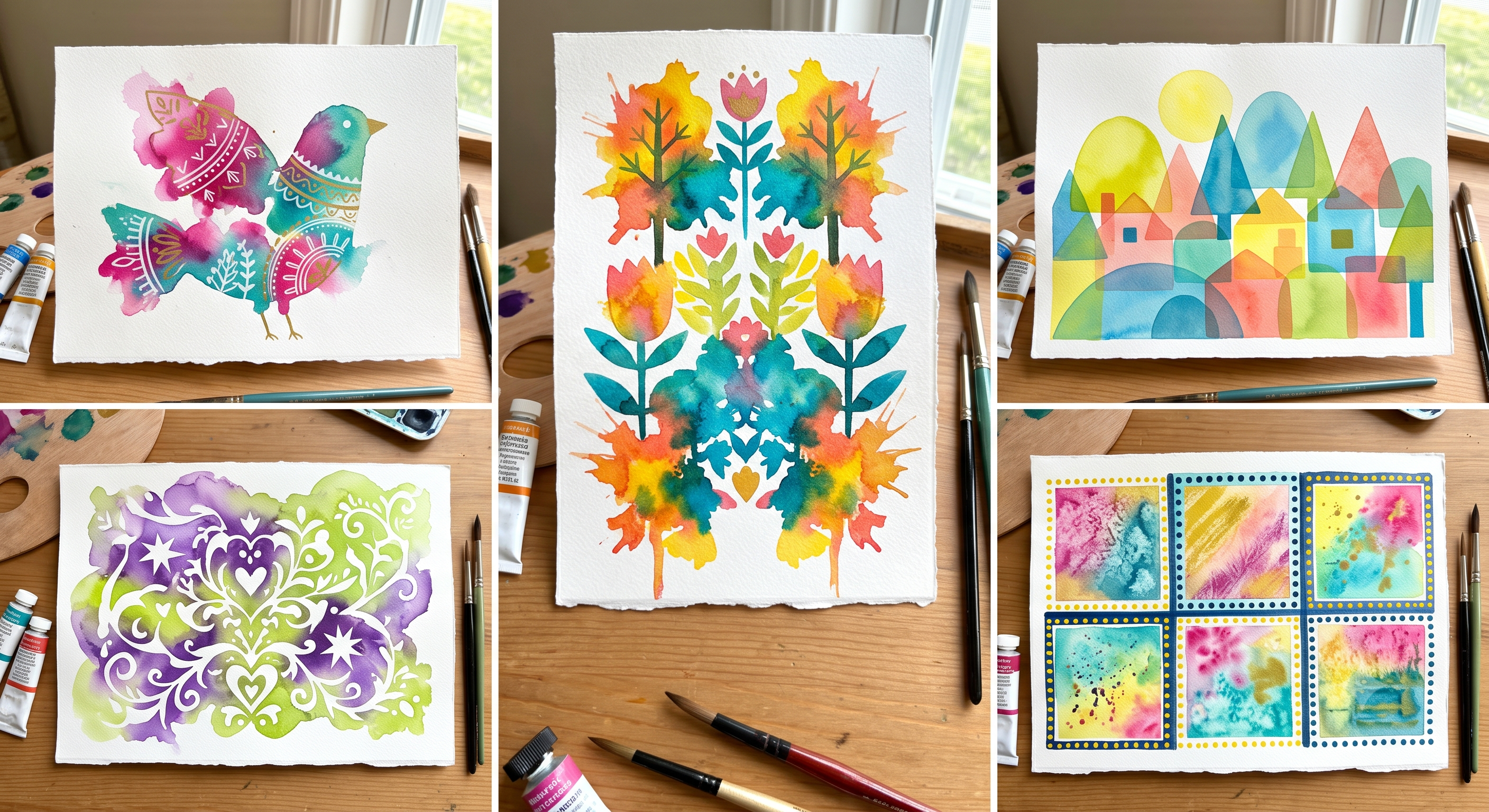
Take a traditional folk motif and break it down into abstract geometric shapes or loose watercolor blobs.
Paint a completely abstract, loose, and messy background using extremely bright, happy wet-on-wet colors (think bright yellow blending into vibrant magenta and teal). Once it is completely dry, use a fine liner pen, opaque white gouache, or gold ink to draw rigid, traditional folk-art patterns over the abstract blooms. The contrast between the chaotic, happy watercolor and the tight, naive folk lines will be entirely your own.
Force abstract, unpredictable watercolor techniques into strict, symmetrical folk compositions.
Lightly pencil a symmetrical grid or folk design. Fill the shapes, but instead of painting them flat, drop in pools of water and tap in highly saturated pigments (like Quinacridone Rose, Aureolin Yellow, and Phthalo Turquoise) letting them swirl and bloom unpredictably within the borders of the shapes.
Use the transparent nature of watercolor to create flat landscapes or scenes made entirely of overlapping abstract shapes.
Paint a transparent, bright yellow circle. Let it dry completely. Paint a bright pink triangle overlapping it (the overlapping area will turn vibrant orange). Keep building a "flat" landscape of hills, houses, or trees using only simple, overlapping geometric watercolor glazes. It will look abstract, but feel like a folk-tale setting.
Let the white of the paper do the heavy lifting for your folk patterns, surrounded by joyous explosions of abstract color.
Use masking fluid to paint repetitive folk patterns—scalloped edges, dotted mandalas, or vines. Let it dry. Then, attack the paper with the most joyful, loose, and wild abstract watercolor washes you can imagine. Splatter, tilt the paper, let the colors run wild. When it dries, rub off the masking fluid to reveal crisp, pristine white folk art trapped in an abstract world.
Treat your watercolor paper like a patchwork quilt of abstract experiments.
Divide your paper into a loose grid. Inside each square, do a mini abstract painting using your happy color palette. Once dry, unify the whole piece by painting decorative folk-art borders around the squares, stitching the chaotic abstract boxes together with deliberate, patterned frames.