Unique rarely comes from inventing something out of nothing.
It comes from an unusual combination plus a few personal rules you repeat until they become yours. Folk art is a generous place to start because it's already part abstract — symbolic, flat, and pattern-driven rather than realistic — so you're not bridging as wide a gap as it feels. Pick a motif, a format, and a handful of colours you love, then paint the same small thing again and again until your instincts show up on the page.
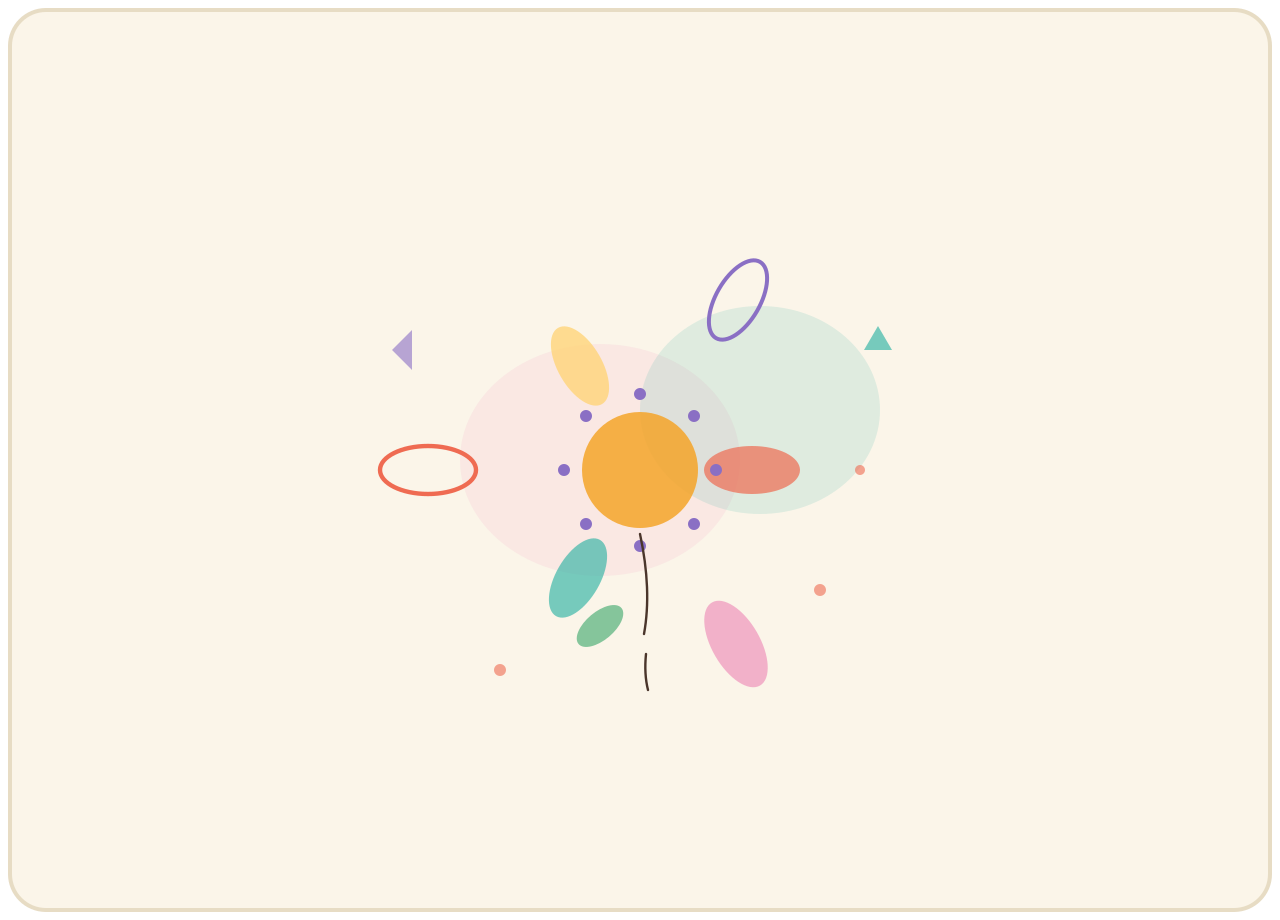
Deconstructed motif
Take one folk symbol — a flower, a bird, a sun, a heart — and let it come apart. Keep the essence (a flower's radial rhythm, a bird's arc) and let the rest drift off into floating shapes and colour fields. Wet-on-wet blooms do the softening for you.
Your signature: the same motif dissolving a different way each time. Across a series, that repetition becomes instantly recognisable as yours.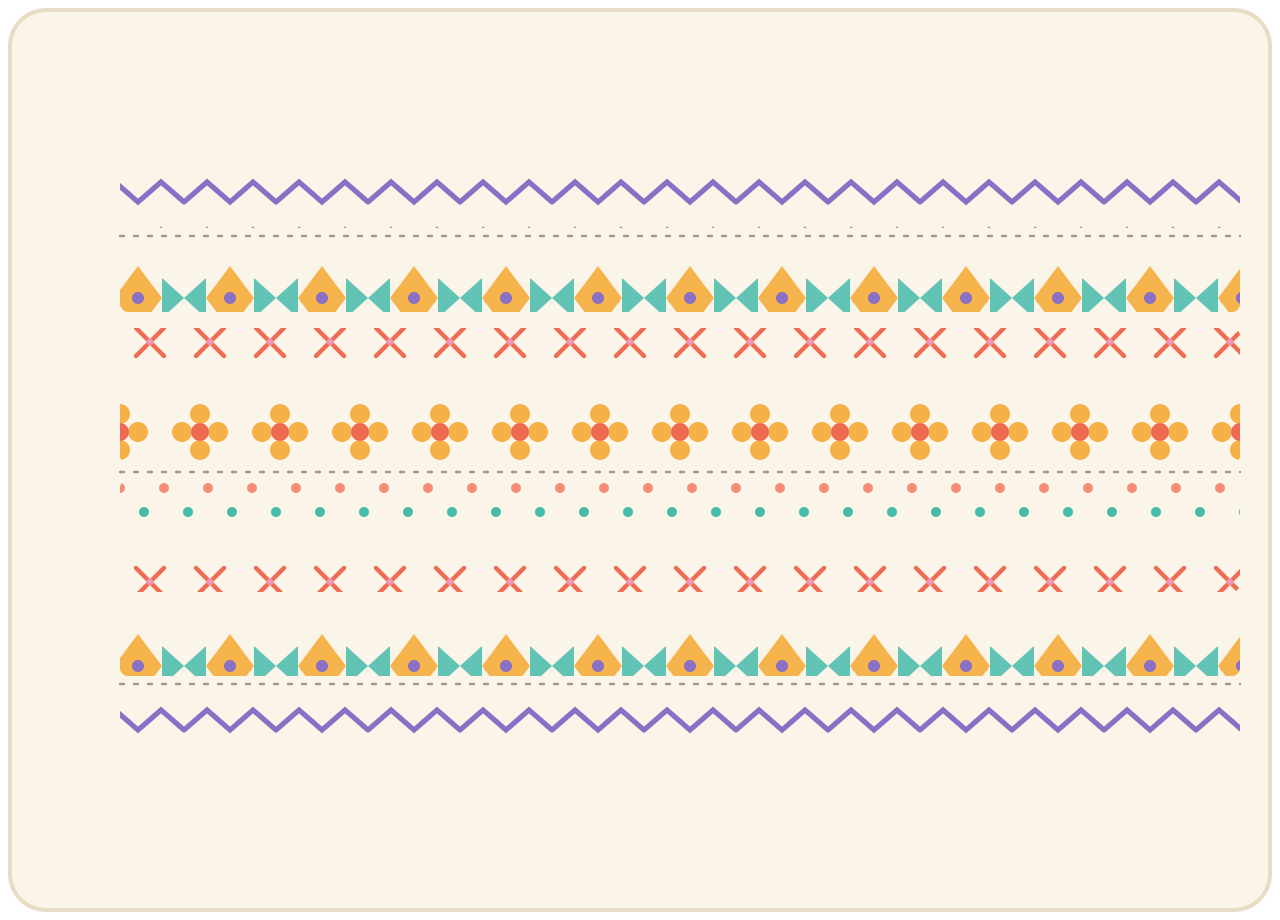
Pattern as the whole subject
Folk art loves borders, repetition and dense decoration. Keep all of it and remove the thing being decorated. The entire surface becomes rhythm and colour — an abstract sampler, a quilt with no bed underneath it.
Your signature: bands and repeats as the subject, never the frame. Vary the stitch, keep the density high.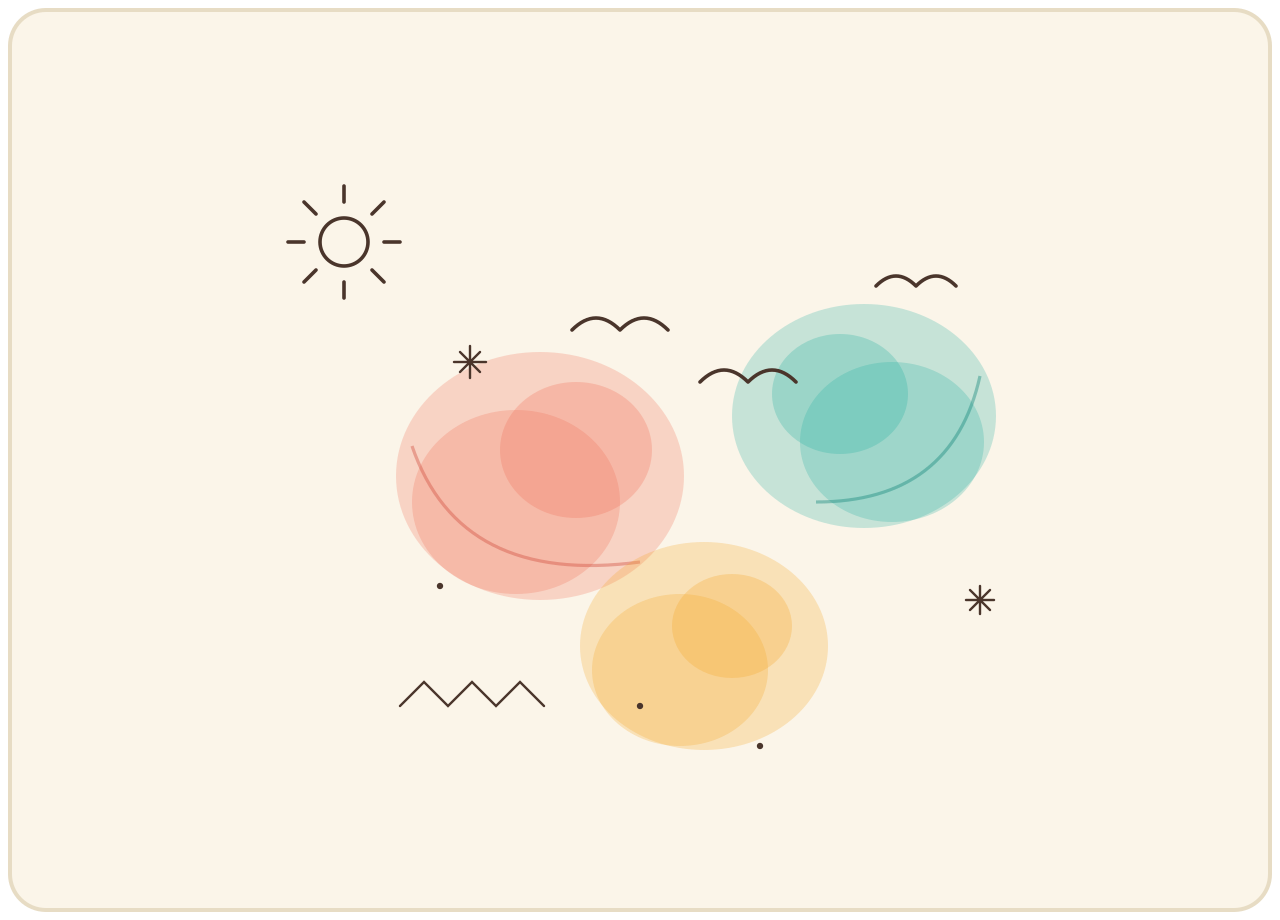
Blooms as your language
Watercolour's backruns — the cauliflower edges most people fight — can be your actual medium. Build the picture from controlled accidents, let the colours pool and bleed, then lay crisp folk linework on top so small characters seem to surface out of the abstraction.
Your signature: soft, wet fields meeting fine, deliberate marks. That transparent-versus-crisp contrast is distinctive all on its own.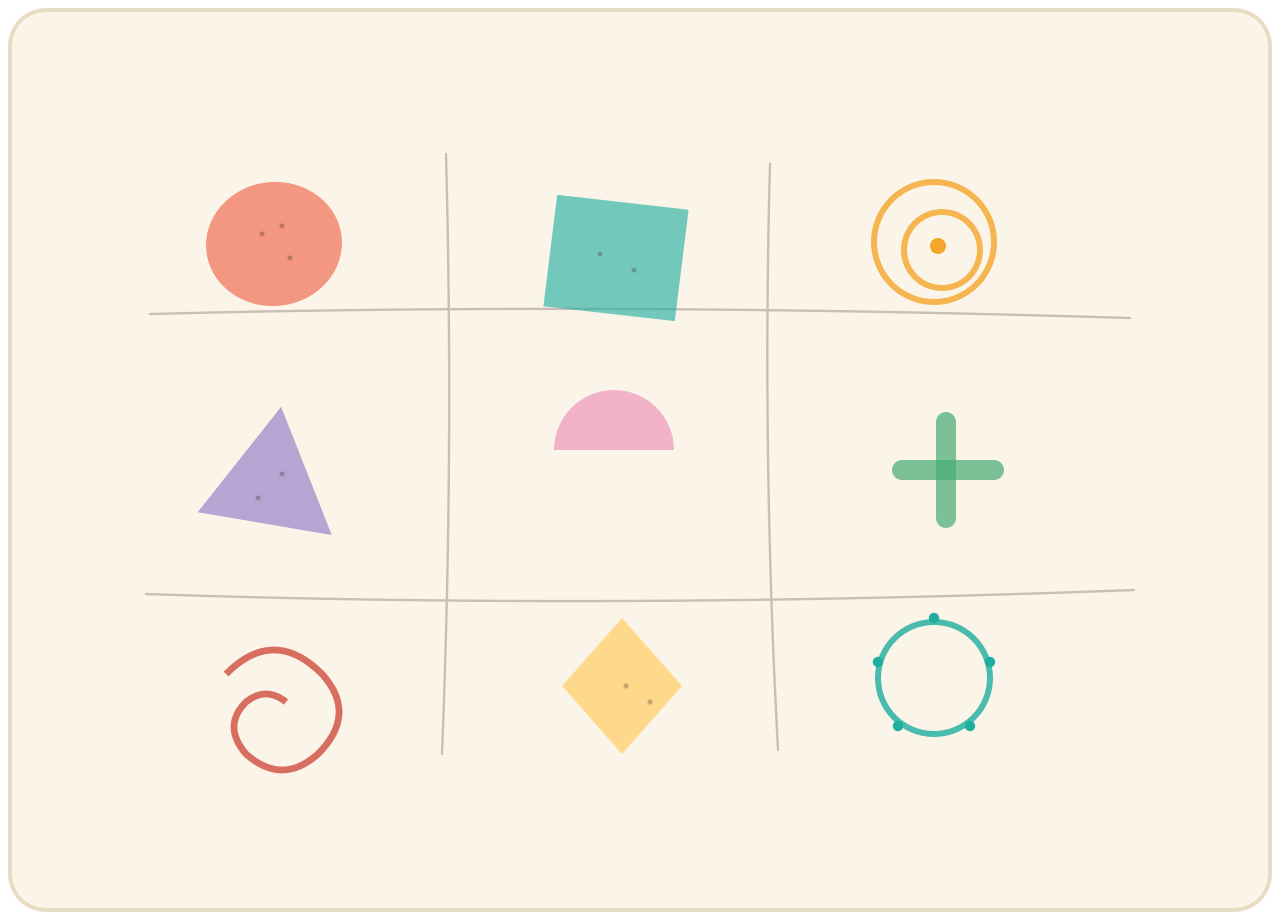
Naïve geometry
Wonky hand-drawn circles, imperfect symmetry, an off-kilter grid — painted in granulating pigments so the settling sediment does half the texturing. The charm lives in the wobble, so resist the urge to tidy it up.
Your signature: confident imperfection. A shaky circle you meant reads as style; a shaky circle you tried to hide reads as a mistake.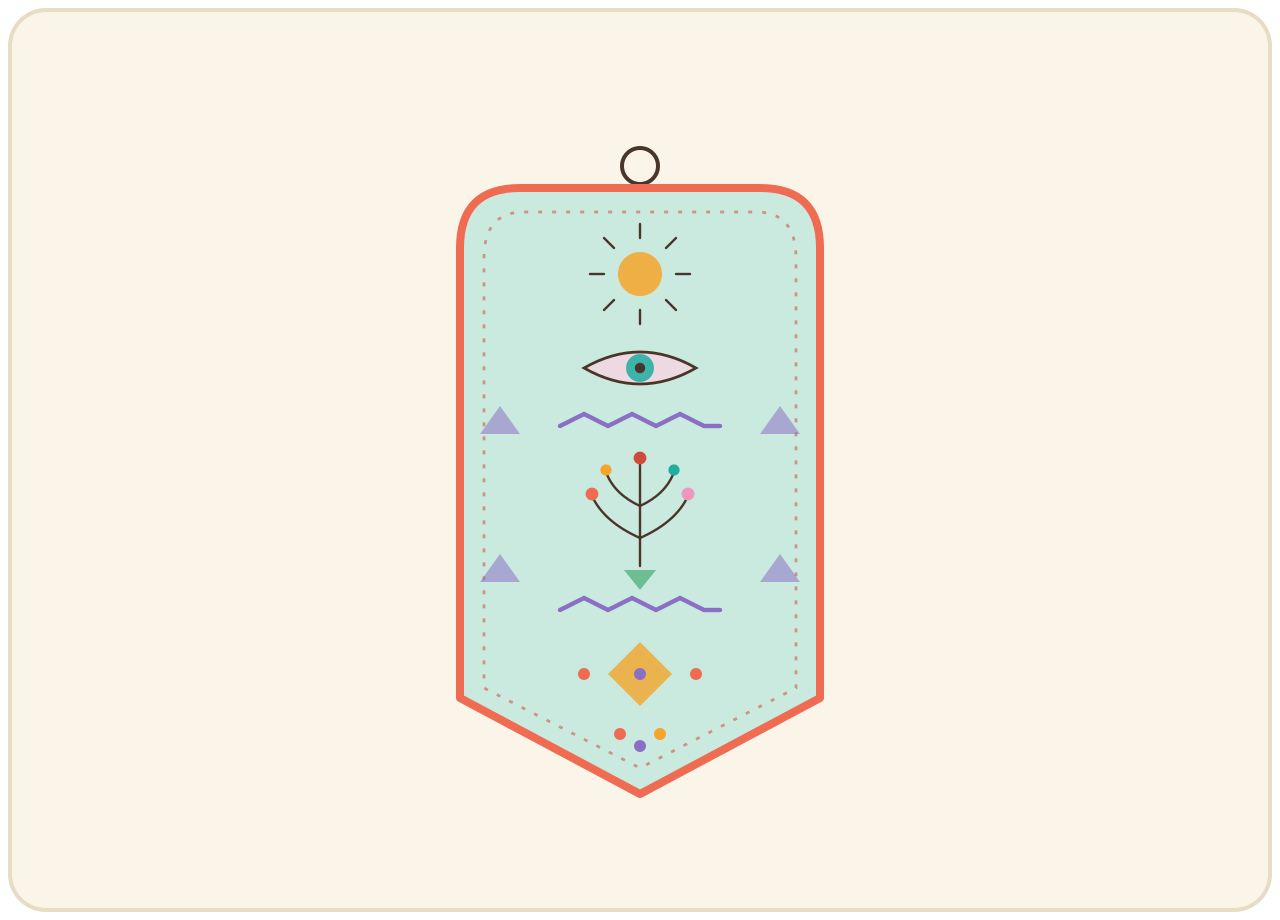
Talisman — a little world
Small, dense, amulet-like paintings packed with protective folk symbols — an eye, a tree of life, a sun, zigzags — all rendered abstractly and symmetrically. The tight, repeatable format makes a strong series and gives you somewhere to put everything.
Your signature: a little world you can paint over and over at postcard size, each one its own charm.The bridge between the two
One material trick physically unites the loose and the folk: transparent washes for the abstract background, then opaque gouache or a fine ink pen for the crisp marks on top. These three behaviours are worth practising for their own sake.
Wet blooms
Drop clean water — or a second colour — into a wash that's just losing its shine. The pigment pushes outward into soft, branching edges you can't fully control, and shouldn't want to.
Granulation
Some pigments settle into the paper's tooth instead of staying flat — cobalt turquoise, potter's pink, and many earths. Let them pool in a wet wash and the texture appears by itself.
Salt texture
Scatter a pinch of salt into a damp wash and leave it. Each grain pulls pigment away as it dries, leaving a scatter of pale stars. Brush the salt off once the paper is dry.
Keep the colour happy, and keep it small
Saturation and warmth do most of the emotional lifting. Four or five colours you love will make the work feel more cohesive — and more yours — than reaching for the whole box. Two starting points:
Sunwashed
Bold folk contrast
The real trick: constraint plus repetition
Pick one motif, one small format, and five colours — then make thirty little paintings. Somewhere around ten or fifteen you'll notice what you keep doing on instinct. That's your style forming. Keep a running note of the watercolour behaviours you fall for — a particular bleed, a texture, a mix — and lean into them on purpose.