✦ Personal style exploration

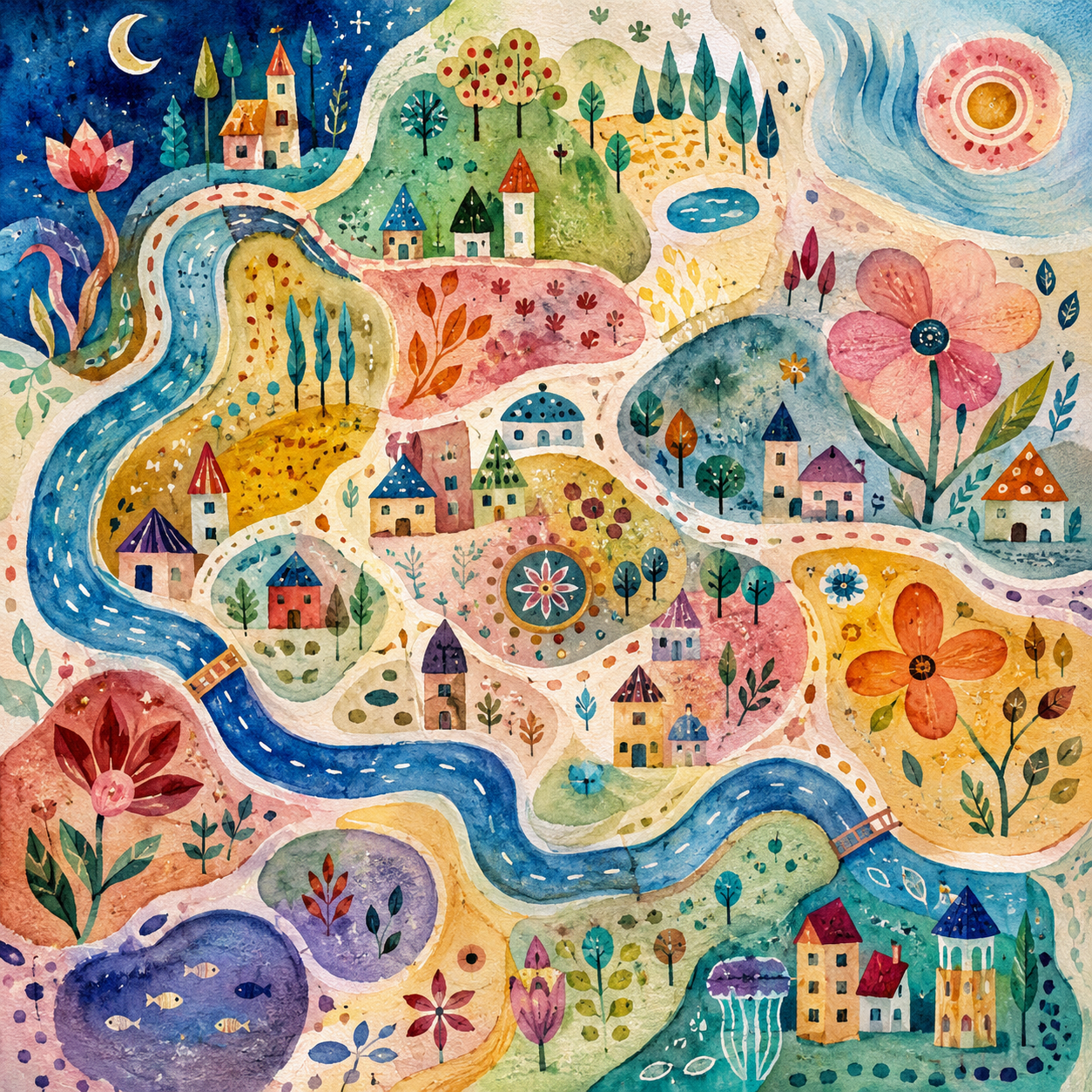
Joyful watercolour worlds

A collection of folk-meets-abstract directions built around happy colour, transparent paint, personal symbols, and selective inspiration from Persian ornamental structure.

Persian-inspired framework filled with playful folk symbols

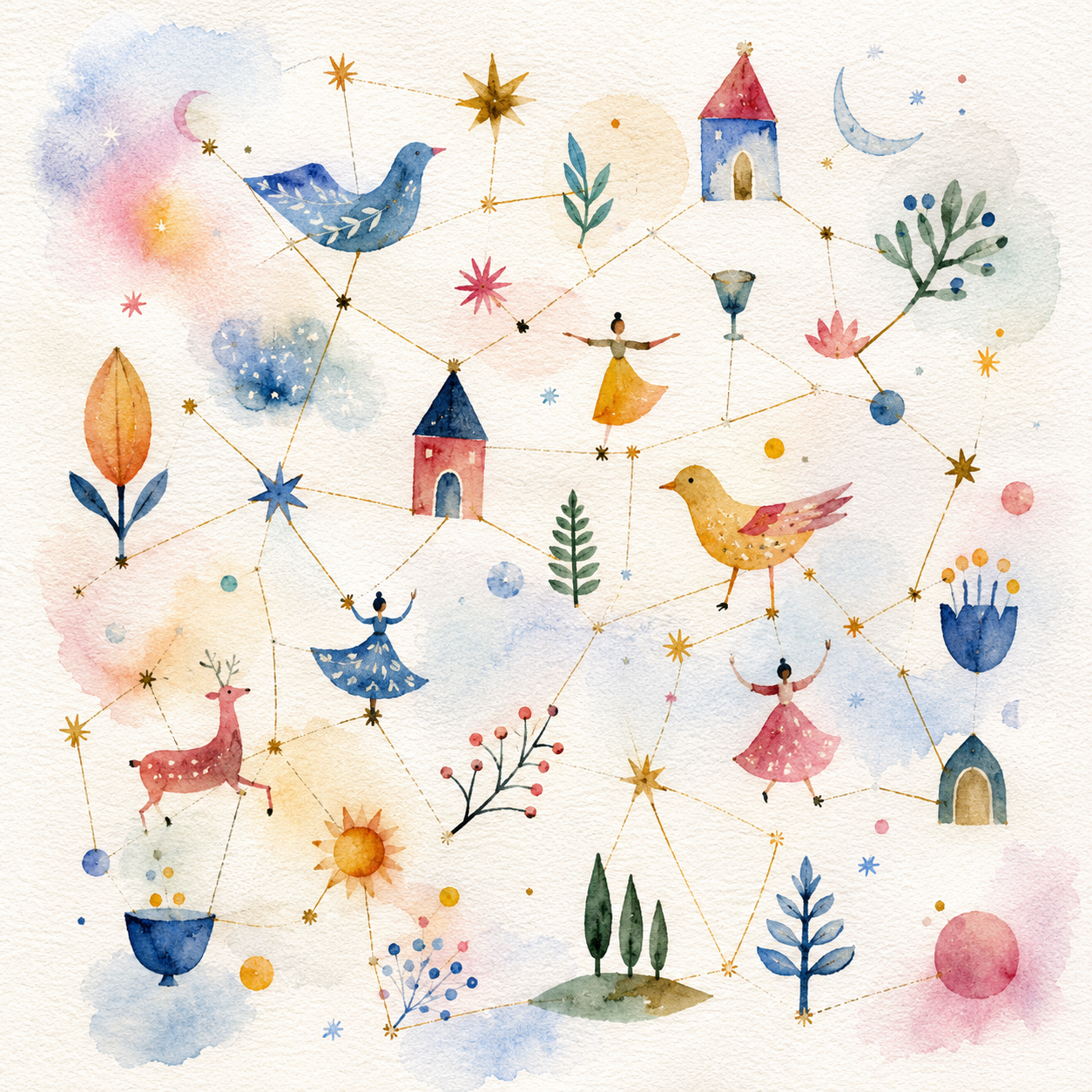
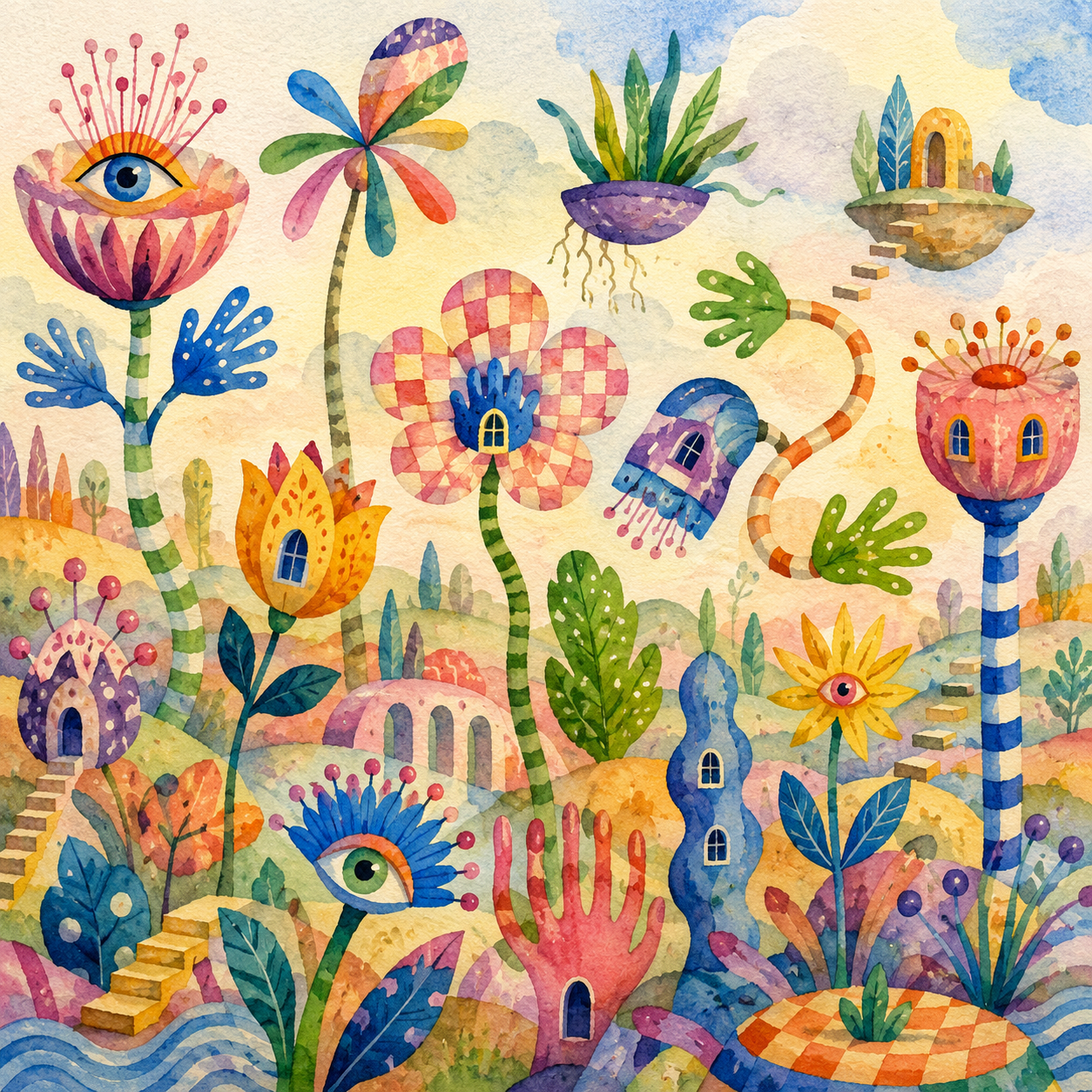
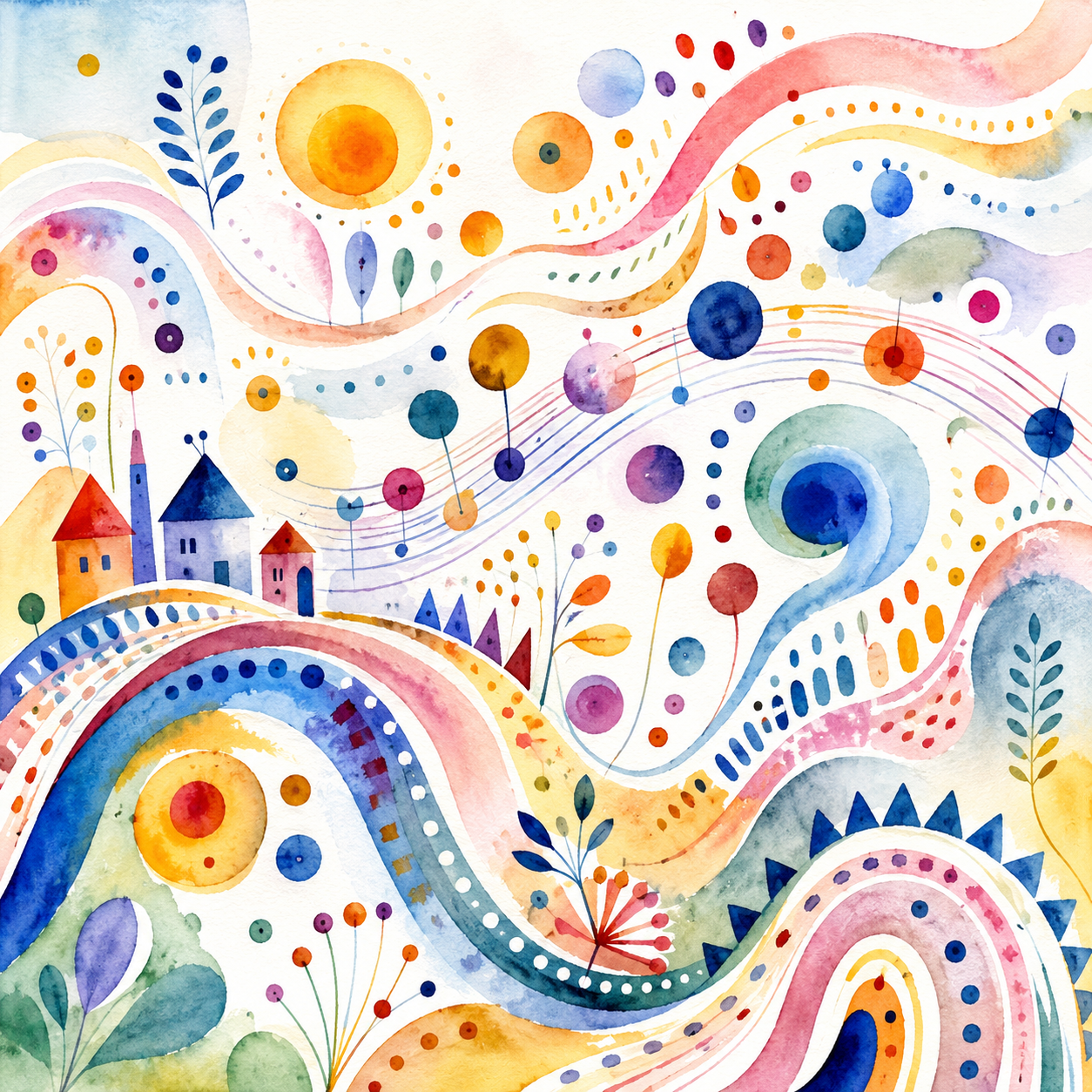
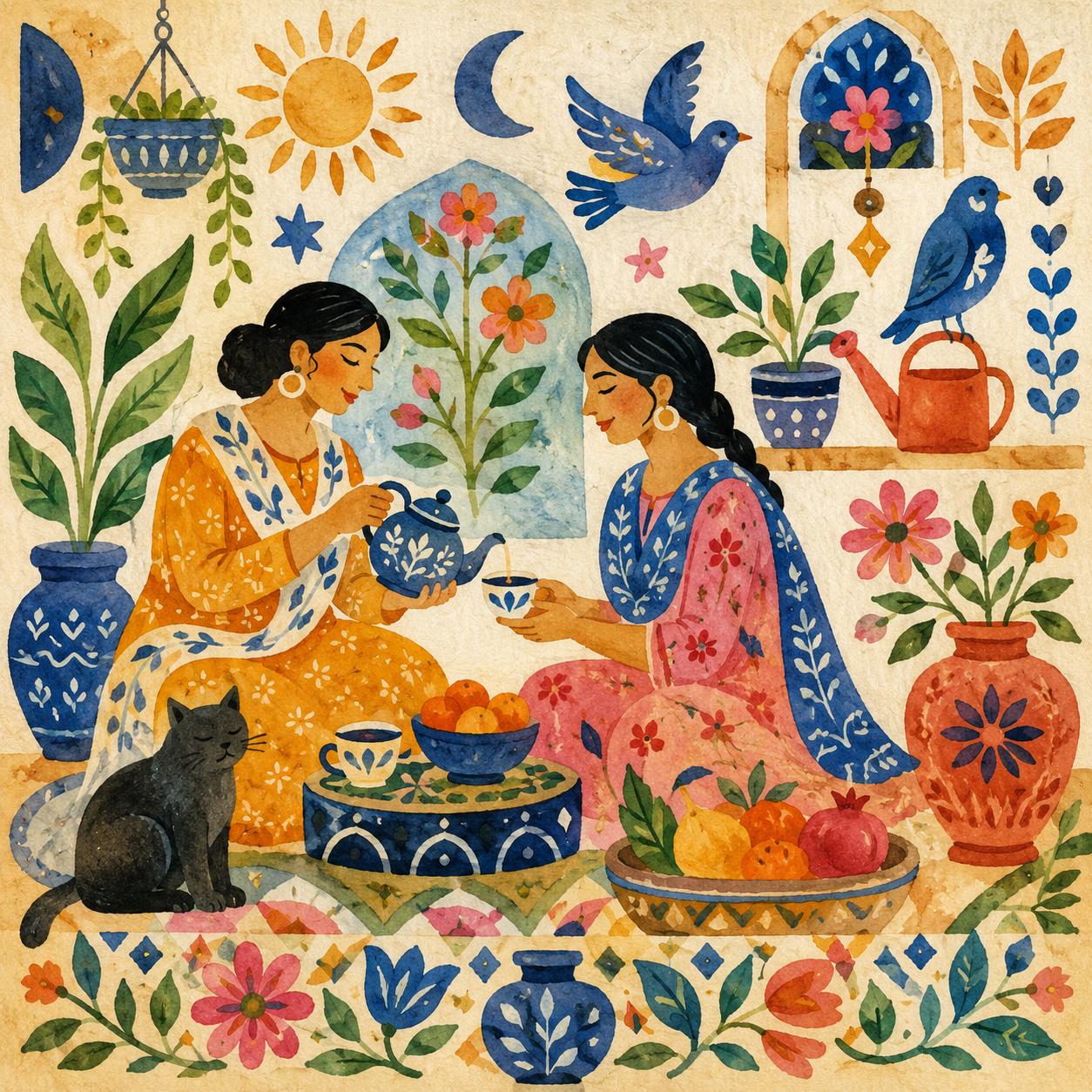
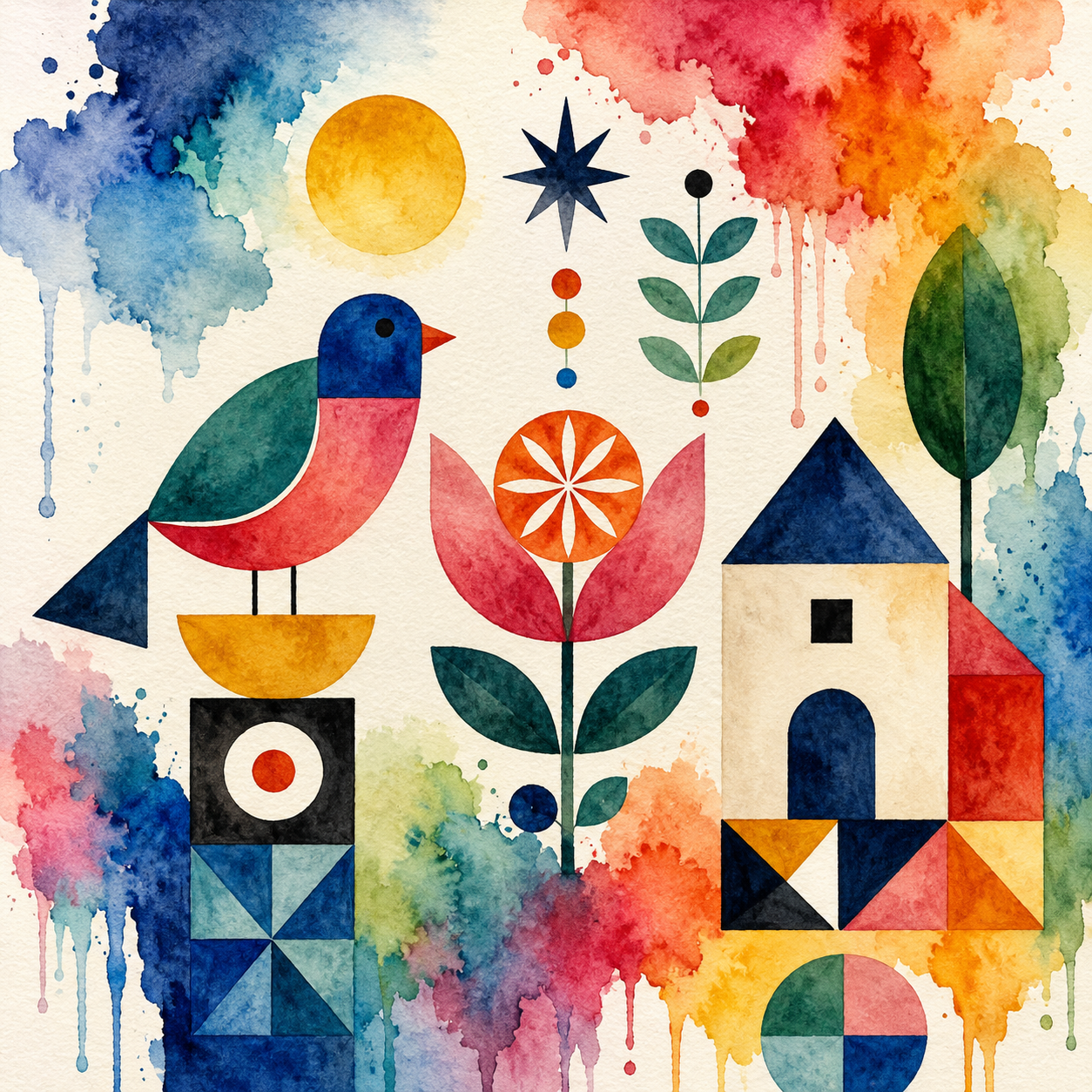
Ten possible visual languages

These are not rigid styles to imitate. Treat each as a laboratory. Borrow a composition rule from one, a recurring motif from another, and a paint behaviour from a third until the combination begins to feel unmistakably yours.

Persian pattern exploration

Three different balances

The useful distinction is between subject, structure and vocabulary. Persian ornament can be the subject, a faint visual accent, or the underlying compositional architecture.

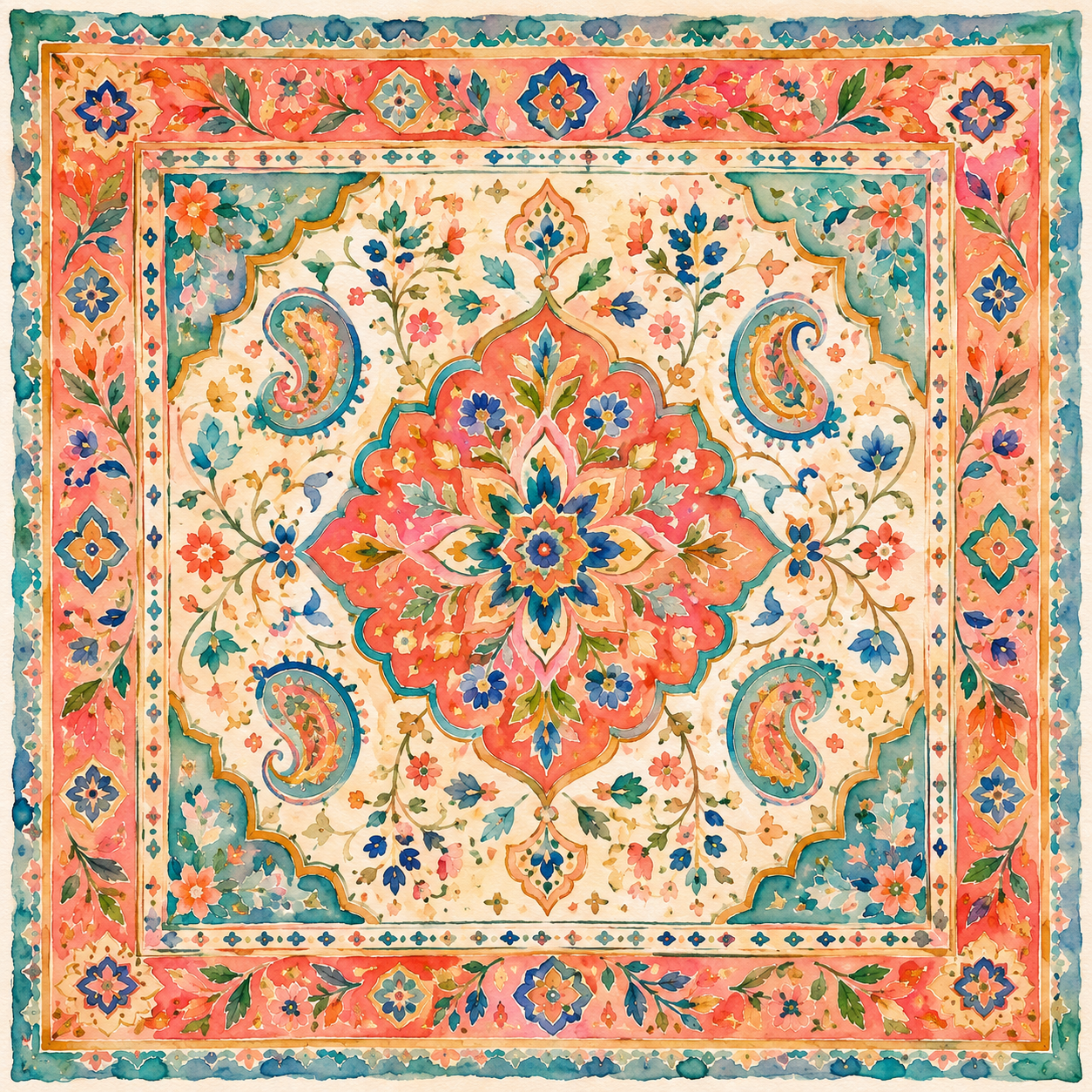
Watercolour study where Persian rug ornament is the main subject

Ornament as subject

A direct rug-inspired study: central medallion, floral field and layered borders dominate. Beautiful, but less aligned with the wish to keep the influence secondary.

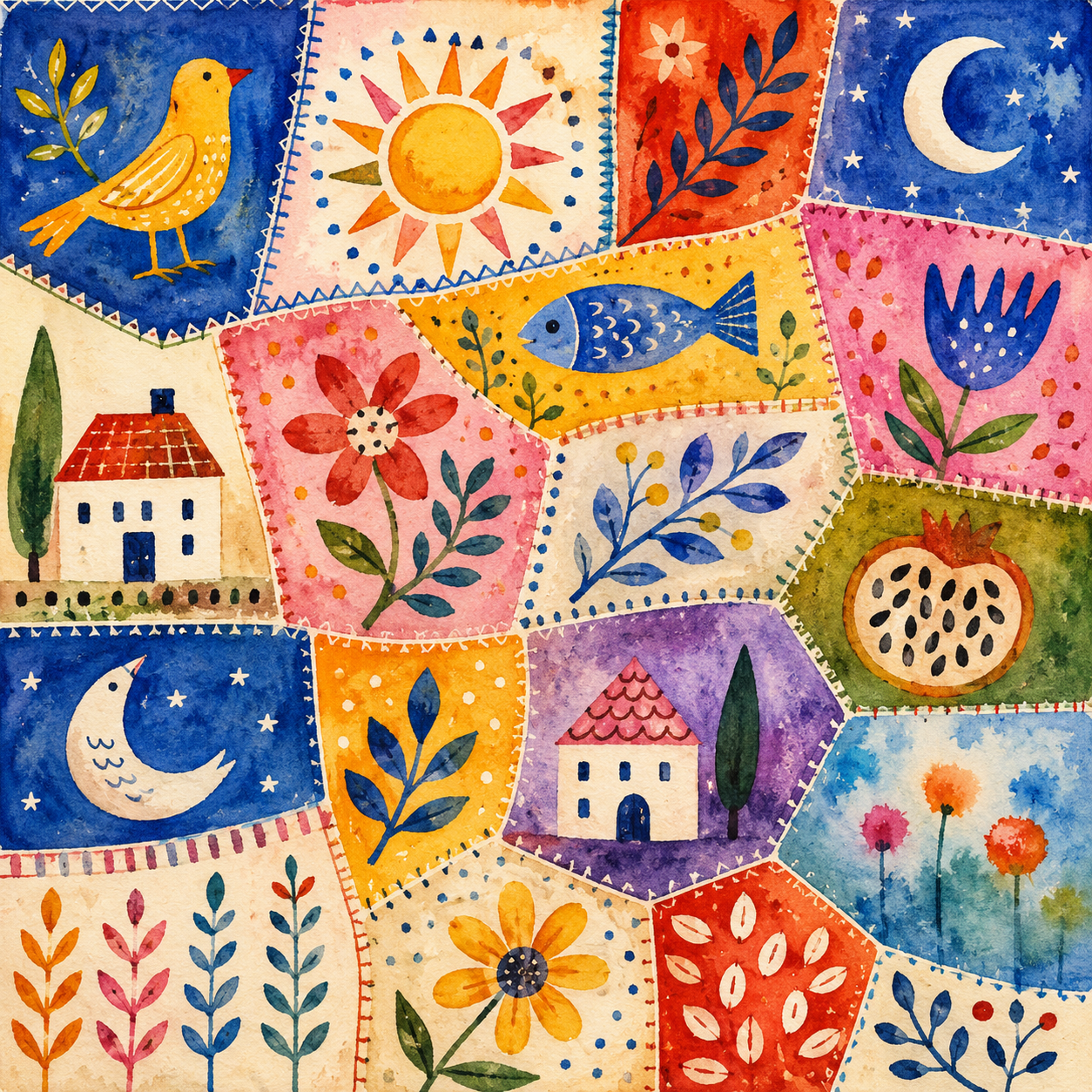
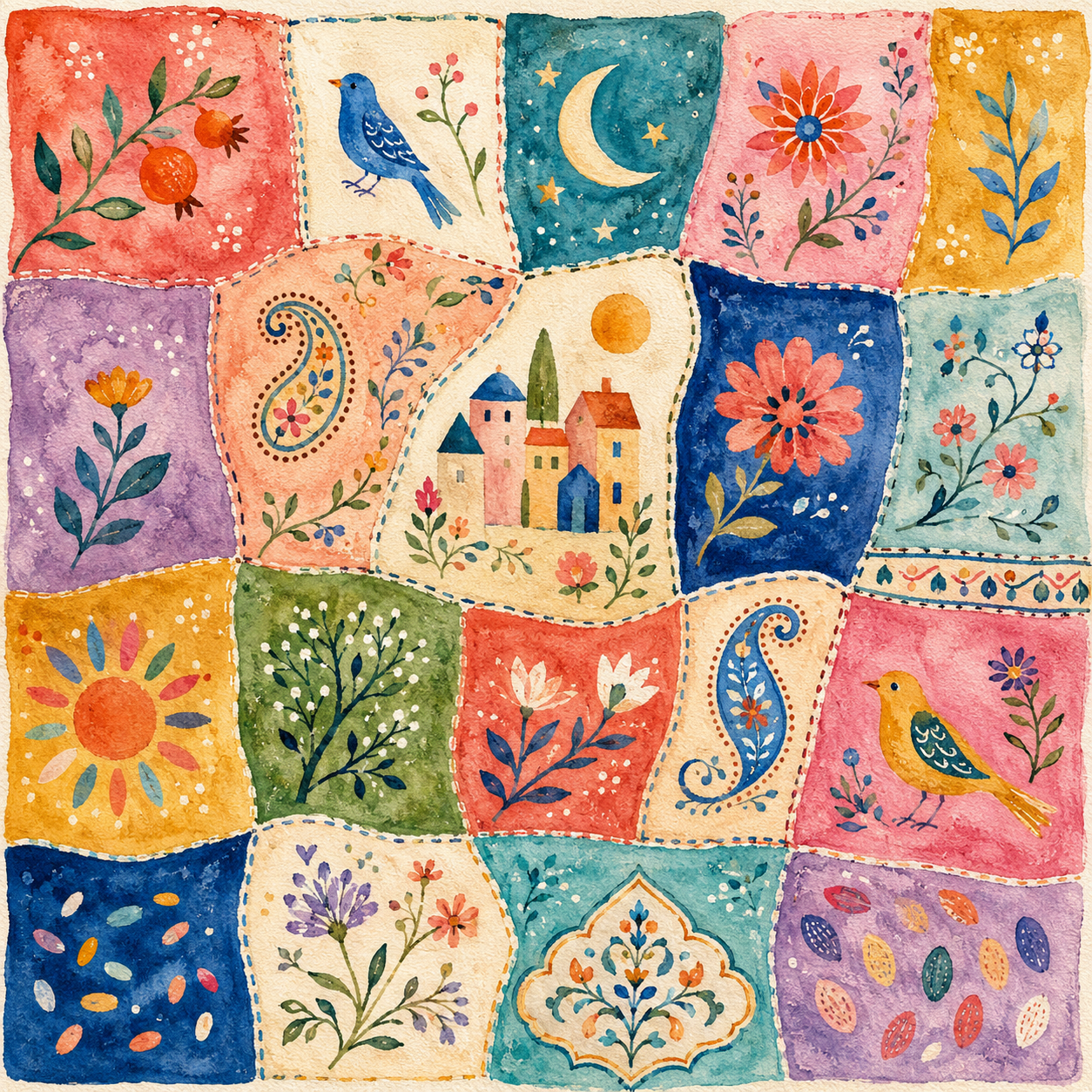
Watercolour quilt with subtle Persian ornamental hints

Ornament as a hint

The quilt remains the main idea. A few boteh forms, floral trims and ornamental cartouches quietly suggest Persian visual heritage.

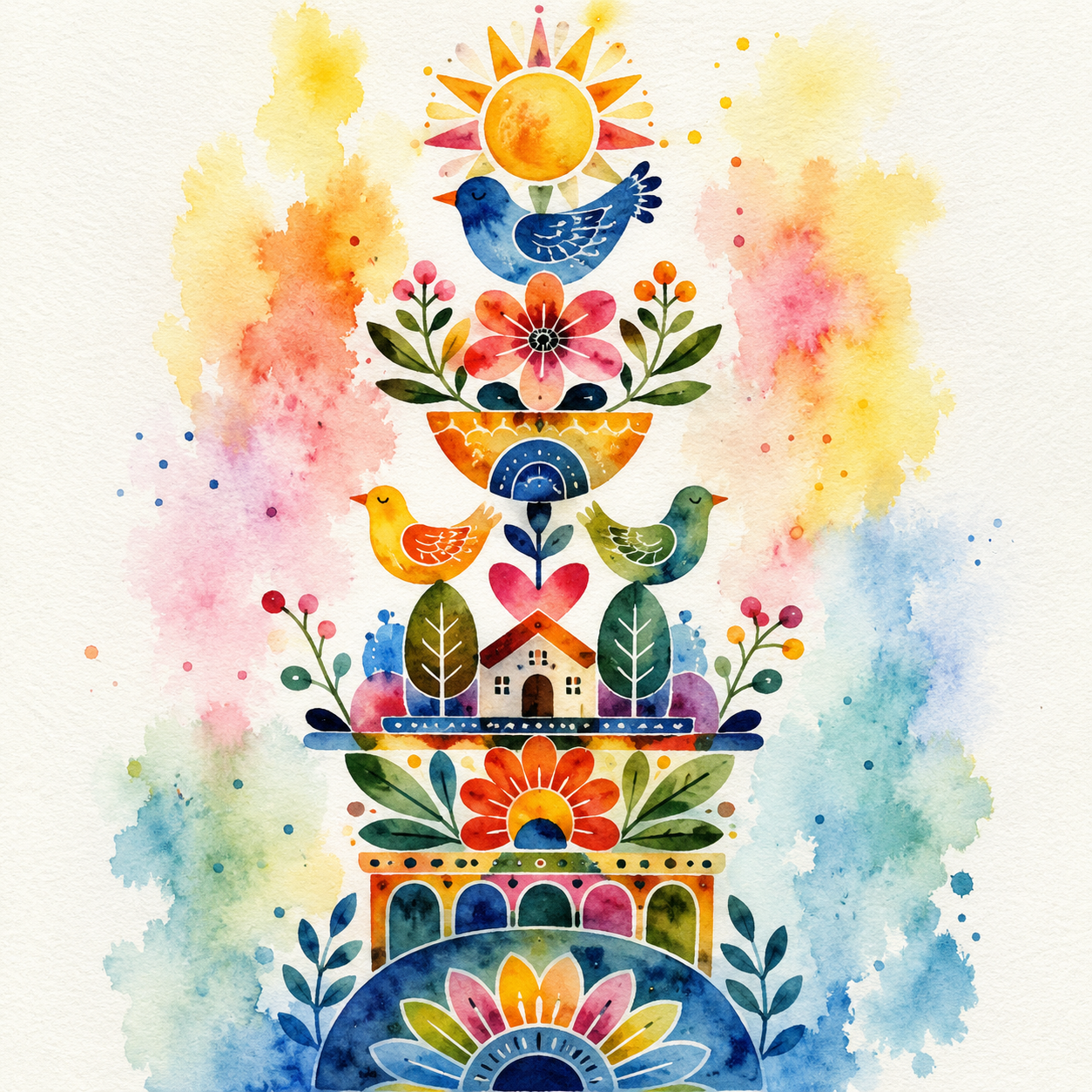
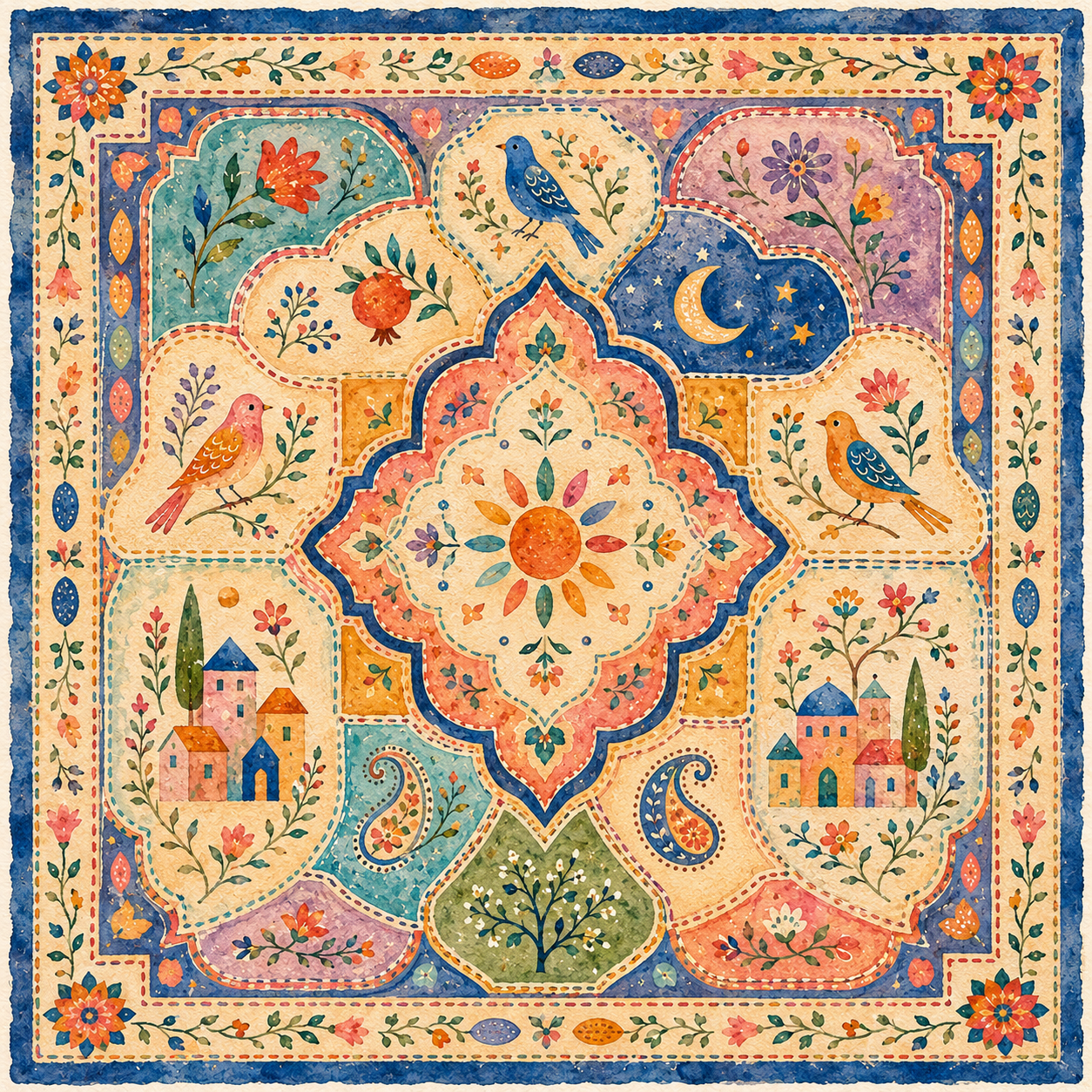
Persian rug framework containing playful folk symbols

Ornament as structure

The overall layout follows a medallion-and-border logic, but birds, moons, villages, suns and trees replace conventional rug imagery. This is the strongest hybrid direction.

A promising personal formula

Persian compositional architecture + playful personal symbols + transparent happy colour + controlled imperfection.

Use symmetry as a starting scaffold rather than a strict finish. Allow small mismatches, paint blooms, shifting borders and unexpected symbols to stop the work from becoming decorative reproduction.

1
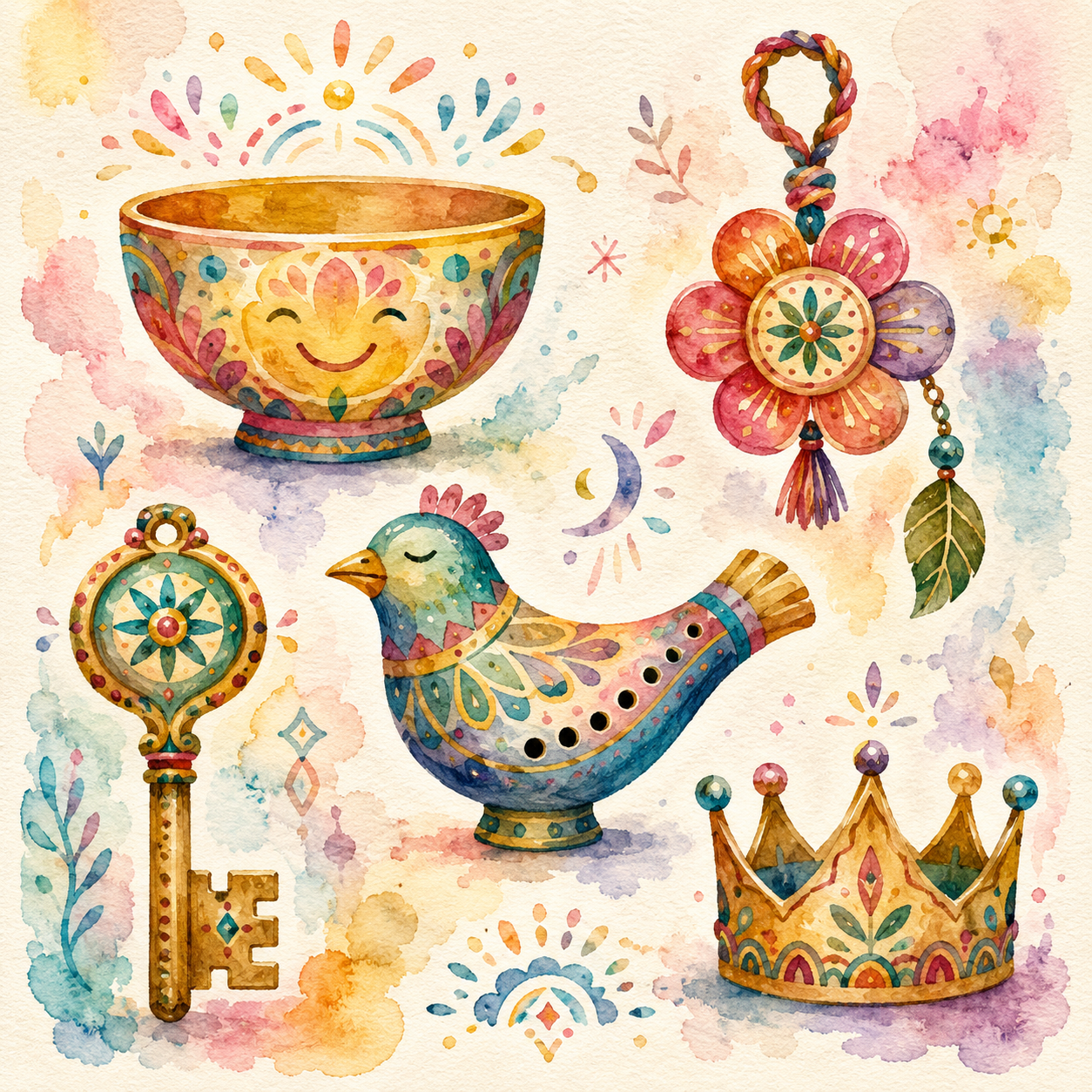
Keep a recurring symbol setChoose five to eight motifs from your own memories—perhaps pomegranate, moon, home, bird, garden, cup and ladder.
2
Use Persian logic, not copied patternsBorrow ideas such as medallion, border, repetition and mirrored balance, then draw every component from scratch.
3
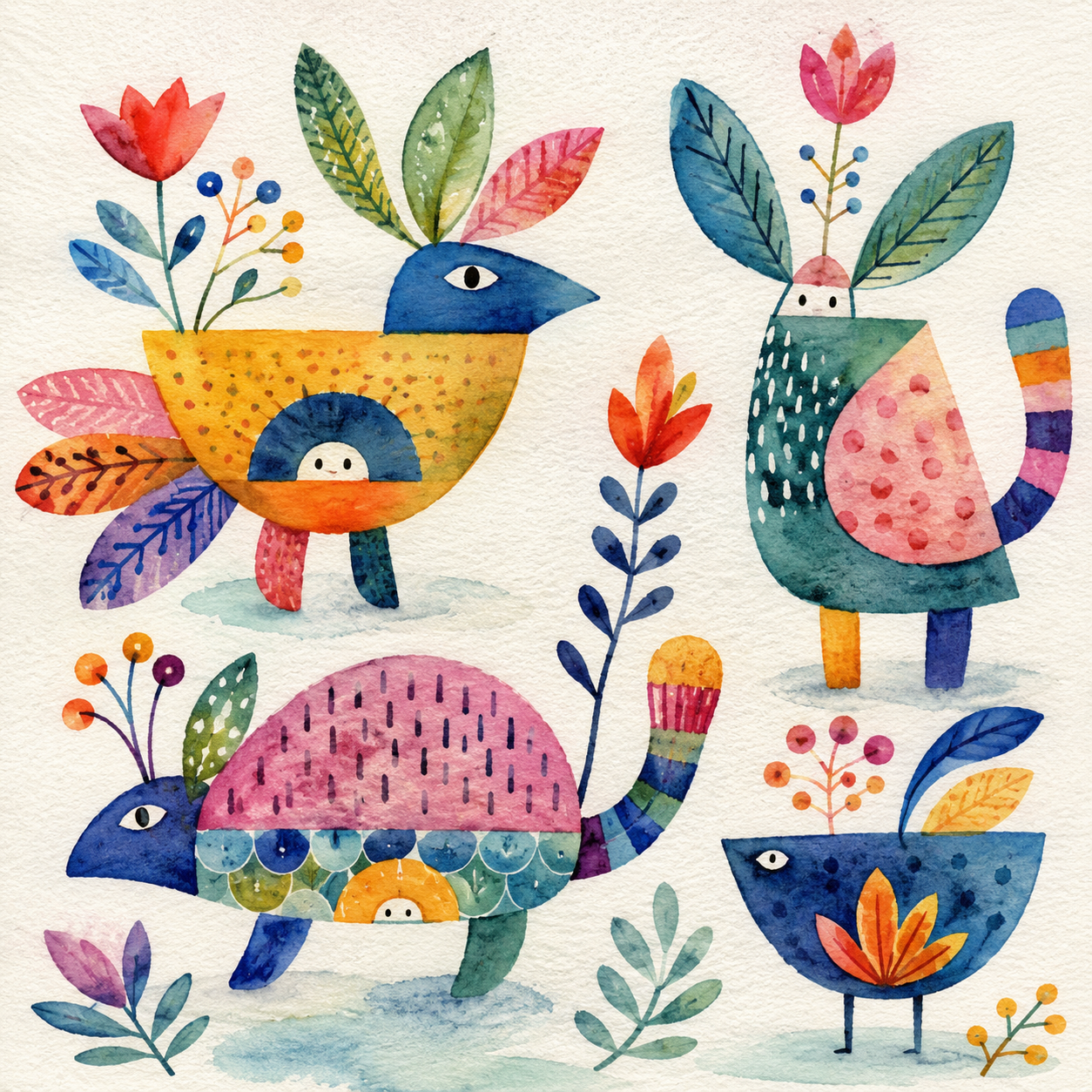
Interrupt the symmetryHide one odd creature, change one corner, leave one patch unfinished or let one colour escape its boundary.
4
Limit each paintingUse one dominant structure, one family of marks and a repeatable palette rather than including every idea at once.
5
Title the worldNames such as “The Garden That Remembers” or “Map of a Very Good Day” help turn decoration into storytelling.
Expanded artwork